

The 5 Best Places to See Northern Lights in Saskatchewan (A Local’s Guide)

Updated: Nov 15
By Dre Erwin – Primary Care Nurse & Aurora Photographer
You can look for northern lights in Saskatchewan at Pinehouse Lake, Sandy Bay, Grasslands National Park, Prince Albert National Park and the Qu’Appelle Valley near Regina. A dark location, clear skies and aurora activity matter more than choosing a famous spot.
As a nurse working in Northern Saskatchewan and a photographer who has spent countless freezing nights chasing the lights, I’ve learned that not all dark skies are created equal. You need more than just darkness; you need the right foreground, the right angle, and the patience to wait.
Use the five areas below as a starting point. Before travelling, check Space Weather Canada’s geomagnetic forecast and your local cloud forecast. The Canadian Space Agency’s viewing tips explain what to look for. A forecast helps you plan; it does not guarantee a display.
Explore photographs from Pinehouse Lake, Sandy Bay and other locations on my interactive photography map. It brings together places I’ve photographed across Saskatchewan, Alberta and British Columbia. For a closer look at the photographs, browse my Northern Lights photo gallery.
Choose your starting point
Starting from Regina: For a shorter outing, begin with the Qu’Appelle Valley section below and my Regina aurora guide. For a longer dark-sky trip, compare Grasslands National Park.
Starting from Saskatoon: For an early-evening city outing, Gabriel Dumont Park has river views and parking reached from Saskatchewan Crescent West. The City’s listed gate hours are 5:30 a.m.–11 p.m.; leave before closing and follow current notices. This is a convenient urban starting point, not a dark-sky or all-night site. City glow makes faint aurora harder to see.
Planning a northern trip: Waskesiu has officially recommended night-sky locations. Pinehouse Lake and Sandy Bay offer settings from my own photography, but confirm local access, fuel and accommodation before committing to the drive.
1. Pinehouse Lake (The Photographer's Gem)
Pinehouse holds a special place in my photography. I founded the Pinehouse Photography Club here, but I no longer lead it. Some of the most vibrant displays I’ve photographed have reflected across the lake.
Why it’s great: The lake provides a massive, unobstructed mirror for the lights. The community is welcoming, and the light pollution is almost non-existent.
Best view: My photograph below was made at “the point” on Pinehouse Lake. If you’re visiting, confirm the exact location, public access and permitted parking with the Northern Village of Pinehouse at 306-884-2030 before heading out. I haven’t verified current nighttime access, so don’t treat the local nickname as a public-access map pin.

2. Grasslands National Park (The Darkest of the Dark)
If you want to see the lights dance without a single streetlamp in the way, this is it. Grasslands is a designated Dark Sky Preserve—one of the darkest spots in Canada.
Why it’s great: The open prairie and dark skies offer wide views. Parks Canada lists Two Trees Trail, Frenchman Valley Campground and Rock Creek Campground as car-accessible stargazing locations. Check current access before setting out.
Pro tip: Plan for the weather and the drive, dress in layers and check cloud cover before leaving. A dark-sky preserve can improve the viewing conditions, but clear skies and aurora activity still decide what you see.

3. Sandy Bay (The True North)
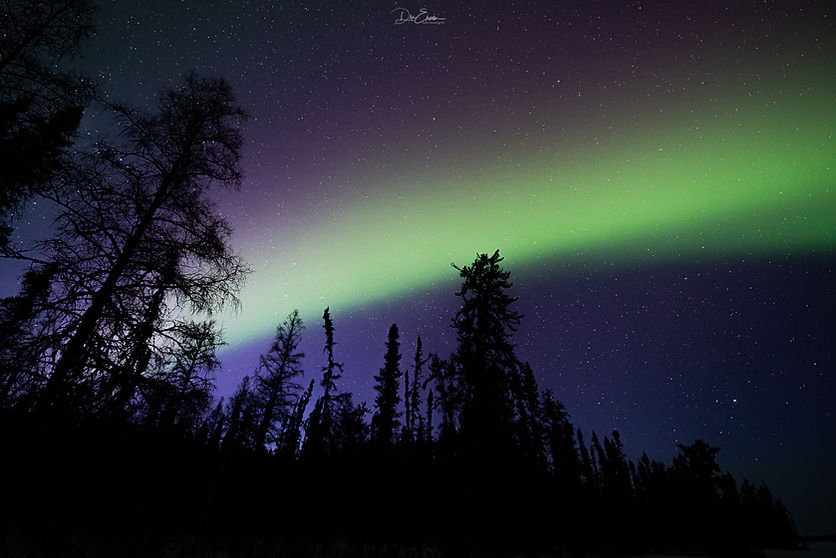
I currently work in Sandy Bay as a nurse, and it is also part of my northern Saskatchewan photography. Displays can spread overhead when conditions line up, but a northern location alone does not guarantee aurora. Check the forecast before planning a night outside.
Why it’s great: Intensity. When the lights hit here, they don't just glow on the horizon; they scream overhead in violets and deep greens.
The Vibe: This is raw nature. It’s perfect for connecting with the land and finding that moment of solitude.
Plan the visit: This is the northern village of Sandy Bay on Highway 135. Use Tourism Saskatchewan’s community listing for its map and local contact, 306-754-2165. Confirm a public viewing place, parking and nighttime access before travelling; this guide does not establish an approved after-dark site.

Behind the photograph: The silhouetted treeline gives this Sandy Bay display a sense of scale. For your own photograph, leave room above the trees for the aurora and check that your foreground does not hide the northern horizon.
4. Prince Albert National Park (Waskesiu)
Accessible, beautiful, and full of perfect foregrounds. Waskesiu is great for beginners because you have amenities nearby but dark skies just a few minutes away.
Why it’s great: The trees. The distinct boreal forest silhouette makes for incredible photos.
Best view: Parks Canada recommends South Bay and Paignton Beach along Narrows Road for open night-sky views. Check current road and site access with the Visitor Centre at 306-663-4522 before setting out.
Parking matters: Waskesiu’s Main Beach and community hall lots operate 7 a.m.–11 p.m., with no overnight parking, according to Parks Canada’s facilities information. Those townsite hours do not establish access hours at South Bay or Paignton Beach. Use designated parking and obey the signs at your chosen location.
5. The Qu'Appelle Valley (The "City" Escape)
You don’t always have to drive 5 hours north. If you live in Regina and the solar data looks good, the Valley is your best bet to escape the city glow.
Why it’s great: It’s close. You can decide to go at 10 PM and be home by 1 AM.
Best view: Research permitted public locations around Lumsden or Craven with an open northern horizon. Scout in daylight: valley walls and trees can block the view. Confirm parking and access, get permission for private land, and do not use a farm approach or bridge as a viewing area.
Starting from Regina? My guide to northern lights near Regina covers Condie, the Lumsden and Craven area, city viewing options, and access checks before you go.

Before you head out
Check the aurora outlook and the Environment Canada forecast for your destination, including clouds, wind and temperature. Longer autumn and winter nights give you more darkness, but cold itself does not create the lights.
Check Saskatchewan’s Highway Hotline for road conditions and closures. Confirm local gates, parking and seasonal services separately. Keep a backup plan if access or the weather changes.
Bring warm layers, a charged phone, spare power and a light for the walk back. Let someone know where you’re going, stay on permitted routes, and keep off unfamiliar ice. If you’re taking pictures, bring a tripod and get your camera ready before your hands get cold.
Planning links and published access information checked October 20, 2026. Recheck the linked operators before travelling.
A Nurse's Prescription for the Cold
Chasing the aurora is about more than just a pretty picture. It’s a practice in resilience. Standing in the cold, waiting for the light to break through the darkness, teaches us patience.
If you can’t make the drive North tonight, that’s okay. I’ve captured that feeling of resilience in my latest collection.

Want to photograph the lights yourself? Start with my northern lights photography guide. You can also browse my northern lights prints and digital downloads.


Wicked