

Why Do People Say You Shouldn’t Whistle at the Northern Lights?

Don’t whistle at the northern lights.
For someone who grew up hearing those words, a photograph of the aurora can bring back more than a night outside. It can bring back a voice: a grandparent, a parent, someone who taught them how to behave beneath that sky.
The warning has a story behind it. But whose story? That is where this question gets interesting.
In a published account, Cree educator Simon Bird connects the warning with the respect he learned from his grandmother. Other people describe different relationships with the lights. The place to begin is with the person telling the story.

The childhood warning Simon Bird remembers
Writing in an account shared by the Cree Literacy Network in 2018, Simon Bird recalled asking his grandmother about the northern lights. She described spirits dancing. He also remembered children being warned against whistling, and his own feeling of guilt when he tried it.
The word he remembered was manâcihik: respect them.
That memory gives the warning a human setting: a child, a grandmother, a teaching about respect. It is Bird’s account of what he heard and experienced growing up.
A Métis voice from Churchill
In Megan Spurrell’s 2024 Condé Nast Traveler interview, Dave Daley, the Métis founder of Wapusk Adventures in Churchill, described the lights as a connection to ancestors. He also explained that people understand whistling differently. His perspective adds another named voice to a question with more than one answer.
A useful question to carry into any conversation is: who shared this teaching, and where did they learn it? First Nations and Métis peoples have distinct histories and identities. A family’s account deserves to be identified on its own terms.

Does whistling actually make the northern lights move?
The scientific explanation concerns space weather and Earth’s atmosphere. NOAA describes energy and particles travelling along Earth’s magnetic field lines and interacting with atmospheric gases. Those interactions produce the light we see.
On that physical explanation, a human whistle is not a way to control the aurora. Seeing the lights brighten just after a sound would not, by itself, establish that the sound caused the change.
NOAA also explains that oxygen can produce green and red light, while nitrogen can produce blue and purple. Read NOAA’s explanation of what makes an aurora.
The cultural question asks something else as well: what does this moment mean to the person standing beneath it? A conversation about that meaning begins with listening to their account.
The part a photograph cannot tell you
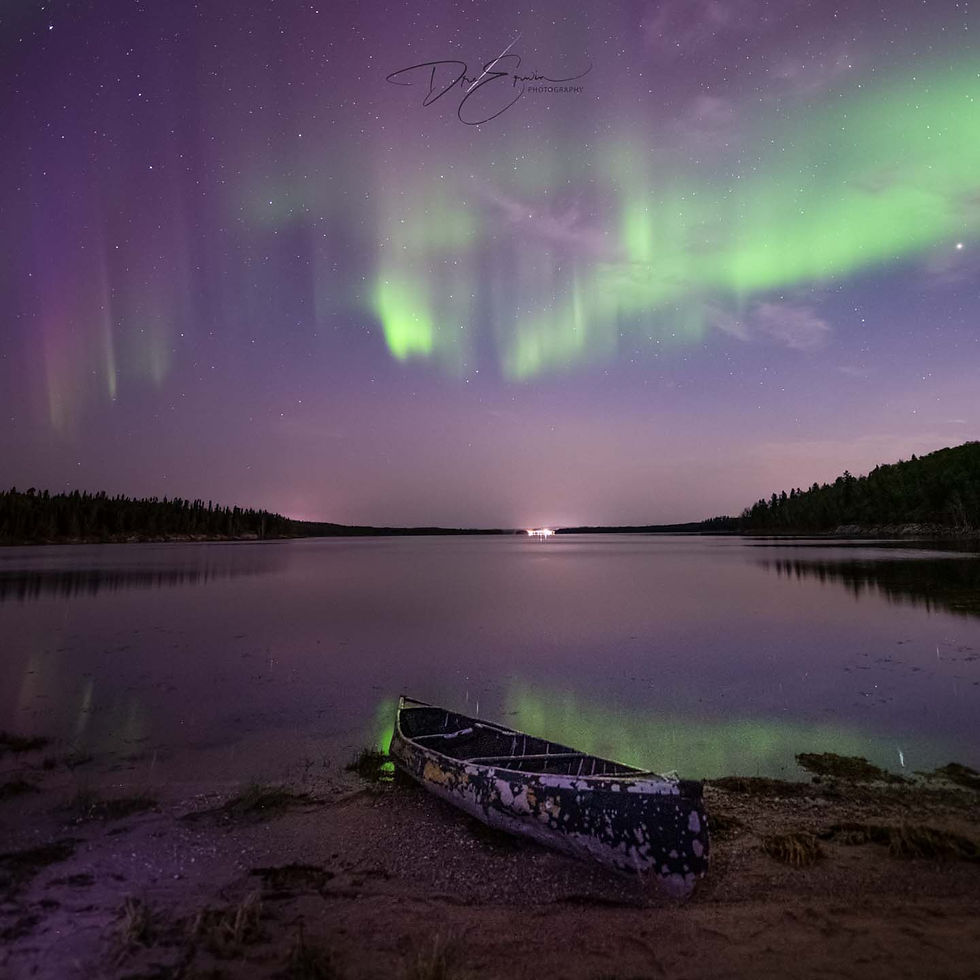
My photography has taken me beneath the skies of Pinehouse Lake, Sandy Bay and the Regina area. Each photograph has a place behind it. The people who know that place bring their own memories, language and experiences.
When I share an aurora photograph, I hope it gives someone a reason to pause and look around. A person scrolling on a phone might stop for the colours. Another might remember being outside with someone they miss.
That is part of what finding light in the darkness means to me: making room to notice something beautiful, and making room for the conversation it opens.
If you want to explore the wider subject, visit my article on northern lights stories and cultural connections. The sources linked here let you hear the particular accounts behind this feature.
If someone shares a teaching with you
Ask whose account it is and which family or community it comes from.
Let the person decide what they want to explain and what they want to keep private.
When sharing it again, credit the speaker and check that they are comfortable with how you have represented their words.
A good question can open a conversation. Giving the answer an accurate name and context helps the next reader understand it.

Were you told this growing up?
Who told you, and what did they say? Was it a warning about whistling, a story about loved ones, or a different teaching altogether?
If you are comfortable sharing, leave a comment with the version you remember. Name the community or storyteller when appropriate, and share only what is yours to share publicly.
If this question reminds you of someone, send them the article and ask what they remember. There may be a conversation waiting behind a photograph.
See the Saskatchewan skies behind my photographs
Explore photographs by location on my interactive map. If you are planning your own evening outside, my northern lights guide for Regina and the surrounding area covers viewing areas and practical access checks. You can also start with my northern lights photography guide.
Sources and credits
Simon Bird: Northern Lights (#CreeSimonSays) — shared with permission by the Cree Literacy Network, May 1, 2018. The short Cree term above is credited to this account.
Megan Spurrell’s interview with Dave Daley — Condé Nast Traveler, March 5, 2024.
NOAA NESDIS: What is an Aurora? — an explanation of the physical processes behind auroral light.
Photographs: Dre Erwin. The cultural accounts above are attributed to their published speakers; they are not presented as teachings shared by every First Nations or Métis family.


Comments